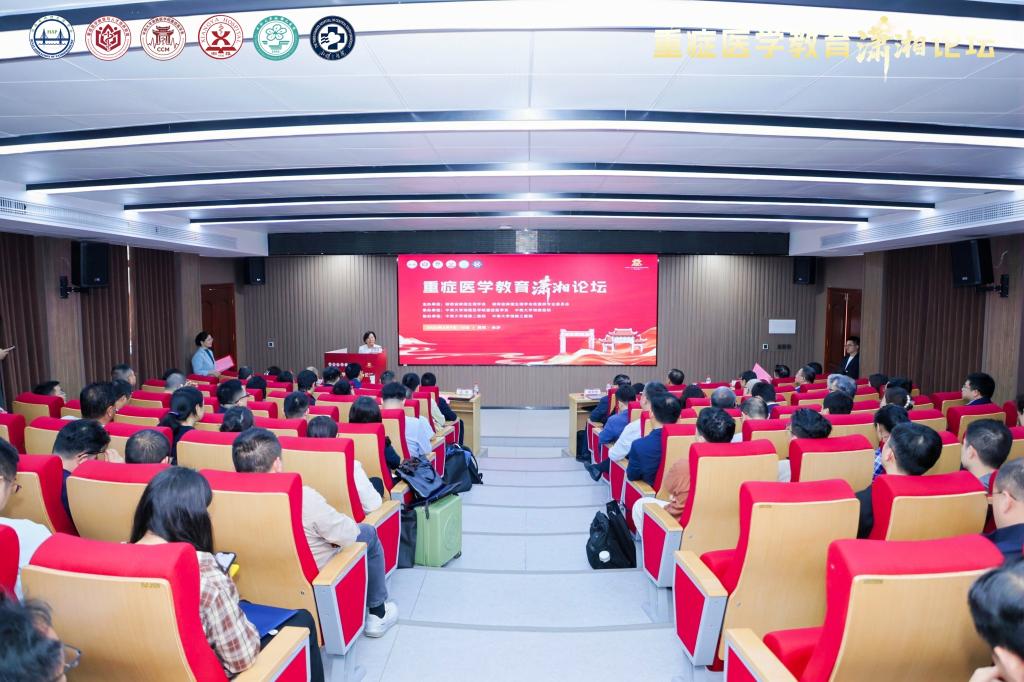
On May 9, the First Xiaoxiang Forum on Critical Care Medical Education was grandly held in Changsha. The opening ceremony was presided over by Professor Zhang Lina, Director of the Department of Critical Care Medicine, Xiangya School of Medicine, Central South University. Opening speeches were delivered in sequence by Professor Lv Ben, Member of the Standing Committee of the CPC Committee, Central South University and Vice President of the university; Professor Wu Minghua, Executive Vice Dean of Xiangya School of Medicine; and Professor Xi Xiuming from Fuxing Hospital, Capital Medical University, Chairperson of the Development Planning Advisory Committee of the Department of Critical Care Medicine, Xiangya School of Medicine.
All speakers agreed that the development of critical care medicine relies on coordinated support from technological breakthroughs and talent training systems. Only by breaking disciplinary and administrative barriers, unifying training standards and forming joint forces for standardized talent cultivation can we consolidate a solid foundation for the long-term growth of the discipline.
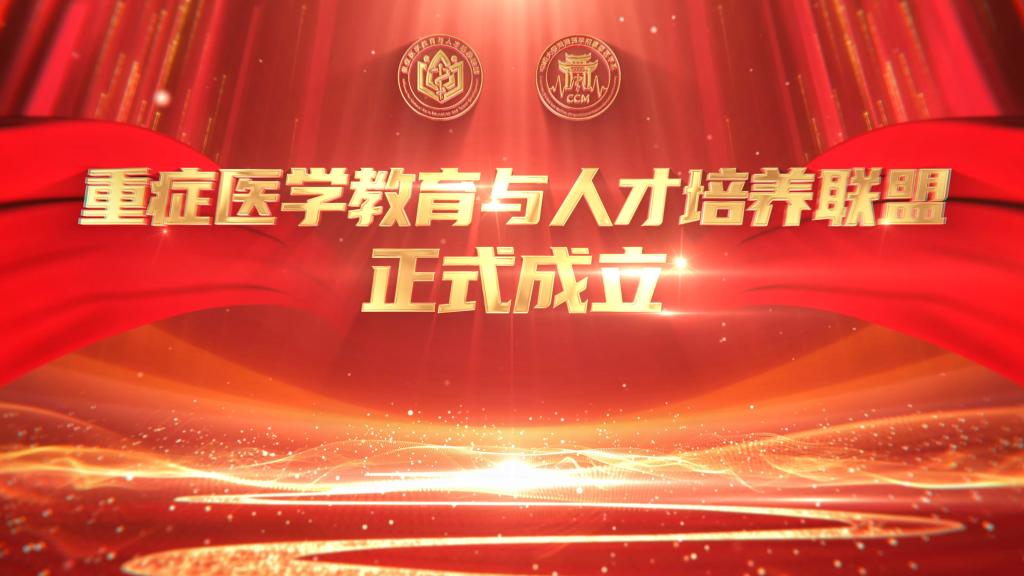
Built on this consensus, the Department of Critical Care Medicine, Xiangya School of Medicine, Central South University took the lead in establishing the Alliance for Critical Care Education and Talent Development (ACCETD). The alliance covers 10 medical universities with independent Departments of Critical Care Medicine and 55 hospitals equipped with critical care teaching & research sections.
The launch of ACCETD fully embodies the leading influence, appeal and benchmark position of Xiangya’s Department of Critical Care Medicine in national critical care medical education. It also marks a brand-new stage featuring resource integration and coordinated development for critical care education in China. By pooling nationwide disciplinary strengths, the alliance will improve the national critical care talent training system and consolidate a solid talent foundation for the sustainable development of critical care medicine.
As the alliance initiator Professor Lv Ben, Vice President of Central South University, introduced, ACCETD follows the mission of “gathering top national academic and clinical forces, innovating critical care education models, cultivating high-caliber academic leaders and professional backbones, and driving long-term disciplinary development”. With the vision of “building a full-cycle training platform for critical care talents, boosting disciplinary progress and safeguarding public health”, the alliance will carry out work around four core goals: system construction, talent recruitment & cultivation, competency improvement and disciplinary leadership.
To guarantee efficient implementation of all initiatives, ACCETD has set up a three-tier organizational structure with clear division of powers and responsibilities, providing institutional guarantees for steady operation.
The Council consists of department and teaching section directors from initiator and core member institutions, responsible for formulating the alliance’s strategic decisions and development plans;
The Secretariat is composed of teaching directors and academic secretaries from all member units, with full-time and part-time staff in charge of daily teaching promotion and alliance administration;
The Expert Committee engages well-known specialists in critical care medicine and medical education at home and abroad to offer professional academic guidance and technical support for the alliance.
Membership is open to teaching hospitals and medical universities nationwide. Member institutions gain access to shared high-quality educational resources including curricula, clinical case banks and teaching faculty, and shall abide by the alliance charter and actively participate in all construction activities.
Professor Zhang Lina, Director of the Department of Critical Care Medicine, pointed out that the alliance will focus on developing a three-stage progressive full-cycle talent training system: undergraduate enlightenment, elite training for postgraduates/residents/specialists, and lifelong continuing education.
Undergraduate stage: Implement the “Voyage Program”. The alliance will carry out disciplinary promotion events titled “Light of Critical Care”, fund undergraduate innovation training programs named “Rising Stars in Critical Care”, and promote critical care medicine as a core course for clinical medicine majors. These measures aim to raise students’ awareness of critical care, build their professional identity and attract outstanding undergraduates to the discipline.
Postgraduate, residency and specialist training stage: Roll out the “Elite Program”. Through annual academic conferences, cross-base teaching exchange visits and regular teaching skill competitions for young physicians, the alliance will unify training standards and foster standardized, high-level clinical backbones.
Continuing education stage: Launch the “Navigator Program”. A national continuing education platform will be built, alongside the “Summit Program” — a special initiative for incubating high-level talents — and translational medicine innovation workshops, to cultivate disciplinary leaders with global visions.
In the future, ACCETD will push forward the formulation of a unified national education evaluation system for critical care medicine, deepen international exchanges and cooperation, and support national key research projects and innovation team building. By integrating premium national educational resources and deepening teaching reform, the alliance will cultivate more high-quality, specialized critical care professionals, elevate China’s academic standing in critical care medicine domestically and globally, and deliver solid talent support to protect people’s life and health.
Source: Department of Critical Care Medicine, Xiangya School of Medicine, Central South University
First Reviewer: Liu Hong, Cheng Wenwei
Second Reviewer: Li Ruijun
Final Reviewer: Huang Gengwen
Translator: Zeng Xiangni



